About Us
BamBuild Ledger provides a streamlined online...
Services
Blog
- Streamlining 3D Print Documentation: Beyond Simple Notes
- The Power of Clear Build Records in Additive Manufacturing
- Mastering 3D Print Iterations: Documenting Every Design Evolution
- The Unsung Hero of Engineering: Why Documentation Matters
- Demystifying 3D Print Failures: A Documentation Approach
- Iterative Design in 3D Printing: Lessons from the Lab
Seamless Project Handoffs: Your 3D Print Documentation
Navigating Complexity: Enhancing 3D Print Project Continuity
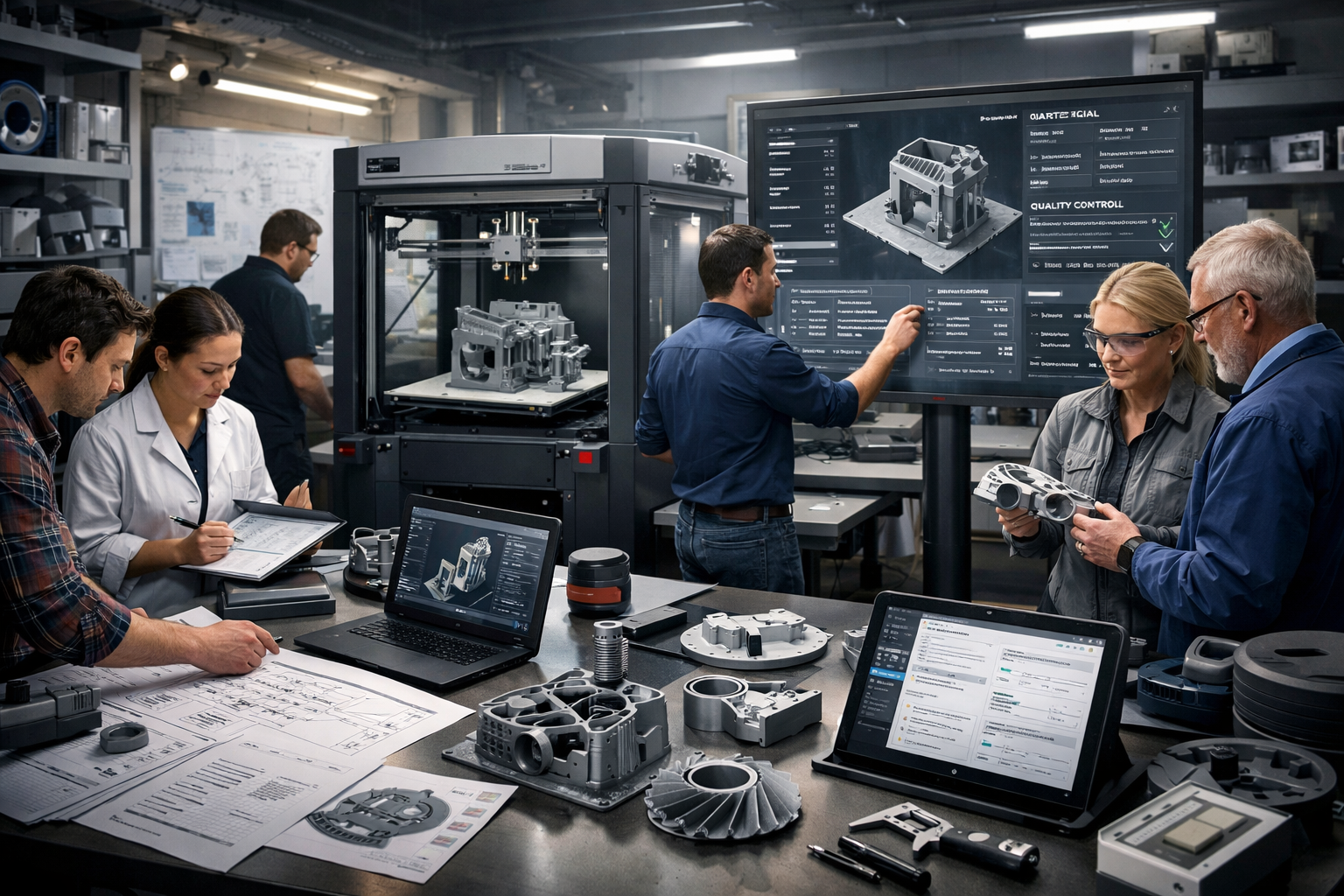
In the intricate landscape of modern manufacturing, particularly within the domain of 3D printing, the transition of projects between teams or phases often presents a significant challenge. We observed a recurring issue: a lack of standardized, comprehensive documentation for 3D print initiatives. This absence frequently led to ambiguities during handoffs, necessitating extensive clarification, increasing the potential for rework, and sometimes resulting in inconsistencies in the final output. The core problem was not a deficiency in technical skill, but rather an organizational gap in capturing and transferring critical project knowledge. This situation prompted us to initiate a focused project aimed at creating a robust framework for 3D print documentation, ensuring seamless continuity and upholding the highest standards of execution across all endeavors.
- Deep Sector Insight: Our team possessed an extensive understanding of advanced manufacturing processes, particularly the nuances of additive fabrication. This foundational knowledge allowed us to pinpoint the precise information crucial for effective project transfer, moving beyond generic templates to truly specialized documentation.
- Proven Methodological Acumen: Drawing upon years of experience in managing complex engineering undertakings, we applied a structured approach to problem-solving. Our history of developing scalable information systems provided a clear pathway for designing a solution that was both comprehensive and practical.
- Collaborative Operational Design: BamBuild Ledger's inherent organizational structure fosters cross-functional collaboration. This enabled a diverse group of experts—from design engineers to production specialists—to contribute to the documentation framework, ensuring it addressed the needs of all stakeholders and integrated smoothly into existing workflows.
The realization of this project involved a methodical, multi-stage process, meticulously designed to address the identified challenge. We began with an intensive discovery and analysis phase, engaging directly with project managers, engineers, and production personnel. This involved workshops and in-depth interviews to map out current documentation practices, identify critical information gaps, and understand the specific pain points experienced during project transitions. This initial phase was crucial for gathering actionable insights and defining the core requirements for our solution.
Following this, the design and prototyping stage commenced. Our team developed conceptual models for a structured documentation system, focusing on key informational categories. These included detailed material specifications, precise print parameters, comprehensive post-processing instructions, and rigorous quality control checkpoints. We also integrated mechanisms for tracking revision history, ensuring every change was logged and traceable. Interactive prototypes were then created and presented to key users for initial feedback, allowing us to iterate and refine the user experience early in the development cycle. This iterative approach ensured the system was not only functional but also intuitive and user-friendly.
The subsequent development and integration phase saw the actual construction of the documentation platform. We prioritized compatibility with existing design software and our internal project management tools, aiming for a cohesive ecosystem. Emphasis was placed on creating an intuitive interface for both data input and retrieval, minimizing the learning curve for our teams. Robust version control and access management features were embedded to maintain data integrity and ensure appropriate information accessibility. This phase required close coordination between our software development and engineering teams, translating conceptual designs into a tangible, operational system.
A rigorous testing and refinement stage followed. The system was subjected to extensive trials using a variety of actual 3D print projects, simulating real-world handoff scenarios. Feedback from various team members was systematically collected and analyzed, leading to further optimizations in clarity, efficiency, and overall functionality. This continuous refinement cycle ensured the platform was robust, reliable, and truly met the diverse needs of our operational teams. Finally, the deployment and training phase involved rolling out the completed solution across all relevant departments within BamBuild Ledger. Comprehensive training programs were conducted to ensure every team member was proficient in utilizing the new documentation system, maximizing its utility and fostering widespread adoption.
- Enhanced Operational Flow: The implementation of the new documentation framework significantly reduced the time previously spent clarifying project specifics during handoffs, leading to a more streamlined and efficient operational flow across all 3D print initiatives.
- Consistent Output Quality: By standardizing detailed print parameters and post-processing instructions, we achieved a marked improvement in the consistency and accuracy of all 3D printed components, upholding our commitment to exceptional quality.
- Empowered Team Autonomy: The comprehensive and accessible documentation empowered team members with immediate access to critical project information, reducing reliance on individual knowledge silos and fostering greater autonomy and efficiency within our project teams.
This initiative has fundamentally reshaped how BamBuild Ledger approaches project continuity in 3D printing. It has not only solved an immediate operational challenge but has also established a new benchmark for internal excellence and knowledge management. The project has opened up new avenues for scaling our complex manufacturing capabilities, allowing us to undertake more ambitious endeavors with greater confidence and precision. Furthermore, it has instilled a deeper culture of meticulous documentation and collaborative knowledge sharing across our entire organization, making us more adaptable and resilient in the face of evolving project demands. This strategic enhancement reinforces our dedication to delivering outstanding outcomes and positions us strongly for future advancements in the additive manufacturing space, demonstrating our commitment to continuous improvement and forward-thinking solutions for our clients.